Knowledge around structural fire protection.
Practice articles on definition, duties, maintenance and retrofit — written for owners, property managers, facility managers and anyone who simply wants to understand what's at stake.

What is structural fire protection? →
Structural fire protection is one of the three pillars of preventive fire protection — the most important one, because it works passively, requires no reaction and runs 24/7 without intervention. An overview of definition, elements, protection goals and legal basis.

Fire doors as a legal requirement — →
Fire doors are mandatory in many buildings — but not everywhere. Which areas absolutely need a fire-rated closure, what the BauO NRW actually demands and what consequences violations carry.
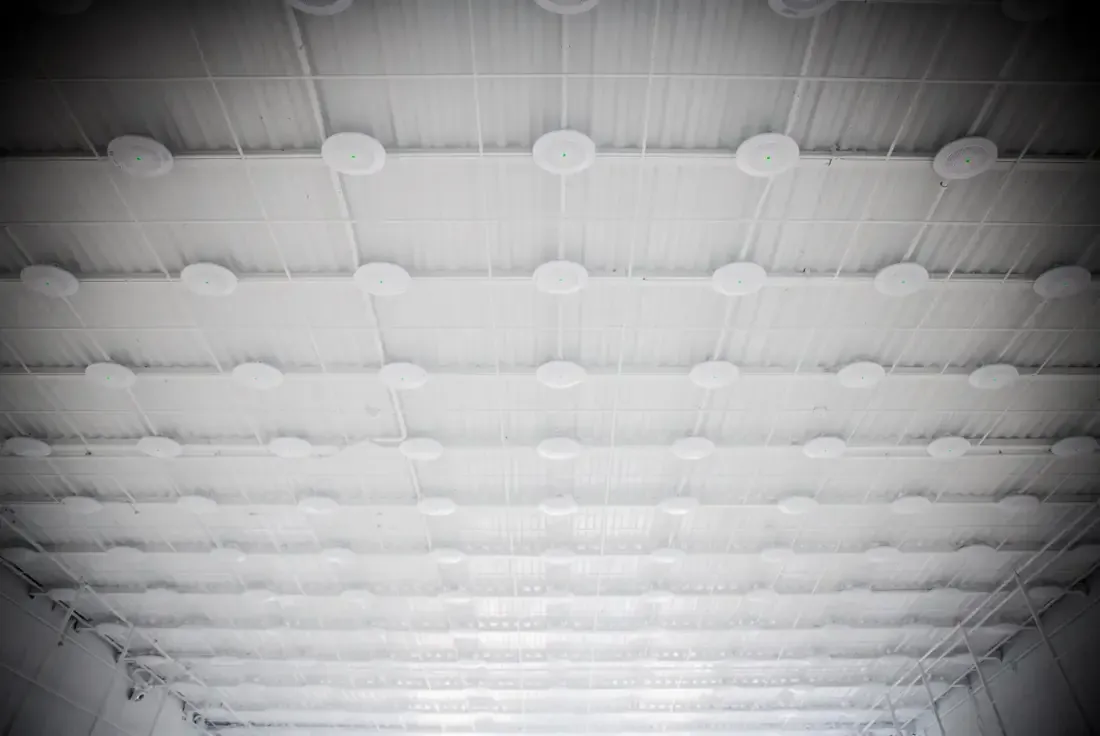
Fire Protection Maintenance Duties — →
Structural fire-protection elements must be maintained — doors, gates and hold-open devices at least annually, penetration seals and cladding by regular visual inspection. The duty falls on the operator personally — neglect risks loss of insurance and personal liability.
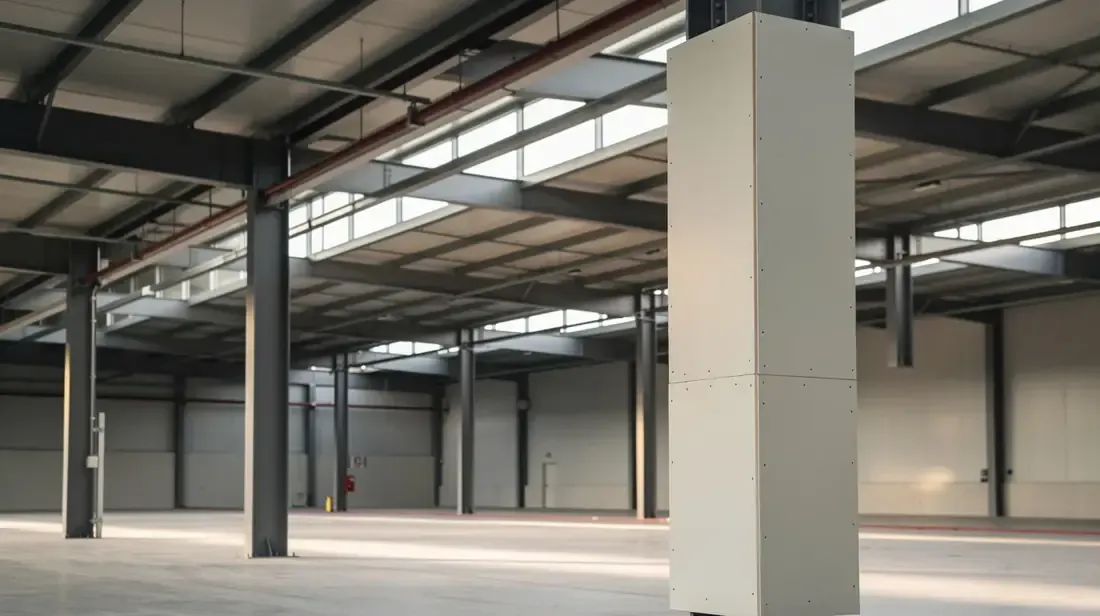
Fire protection for steel structures →
Steel does not burn — but it loses load-bearing capacity rapidly under heat. The job of fire protection is to keep the steel temperature below a critical limit for a specified duration. Four systems do this — boards, intumescent coatings, sprays and membrane systems. What sets them apart, and when each makes sense.
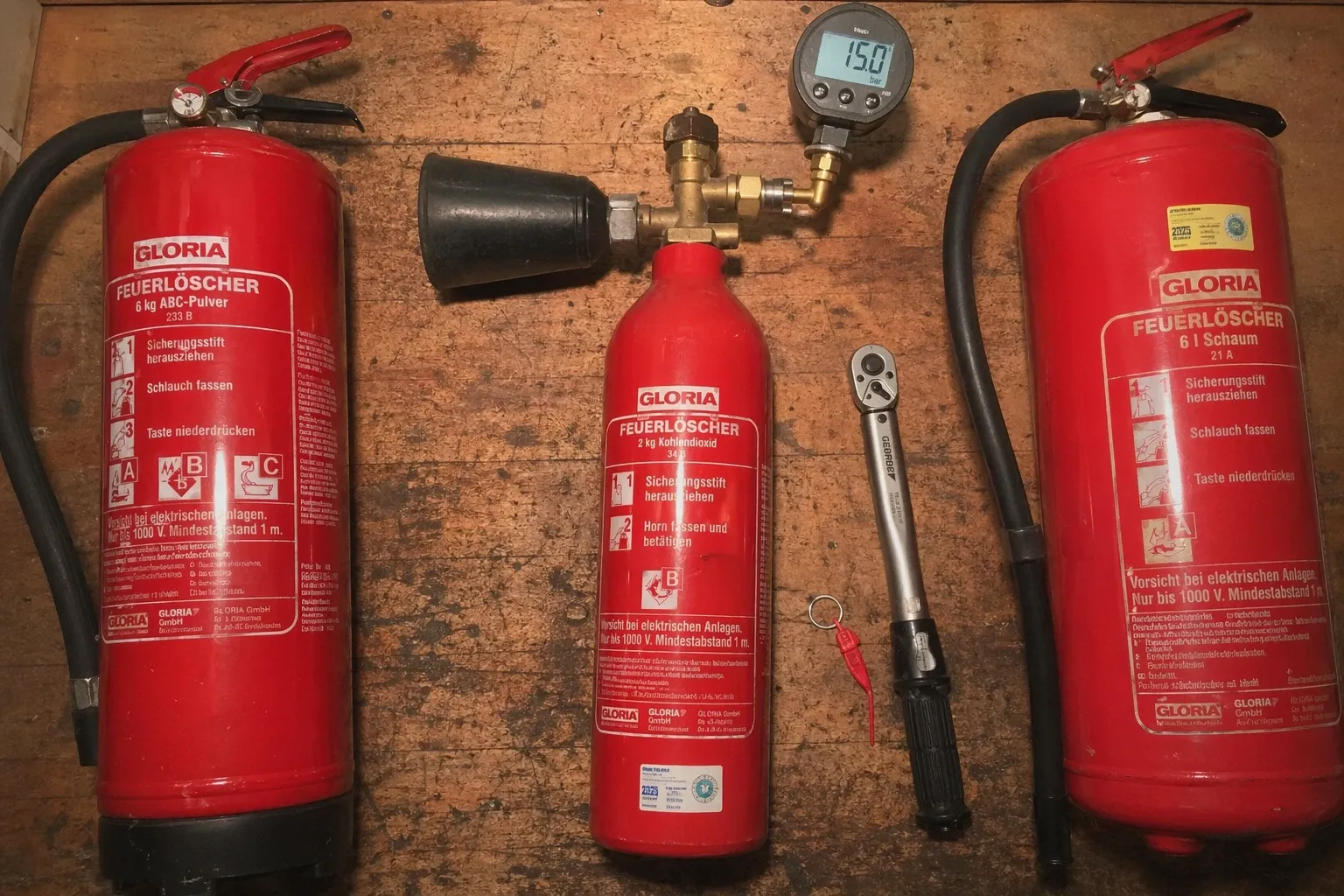
Fire Extinguisher Testing: Intervals, Cost, Duties (applicable proof of usability) →
Mandatory every 2 years: The competent-person testing of fire extinguishers in accordance with the applicable proofs of usability — who may, what is tested, what it costs, what happens on default.
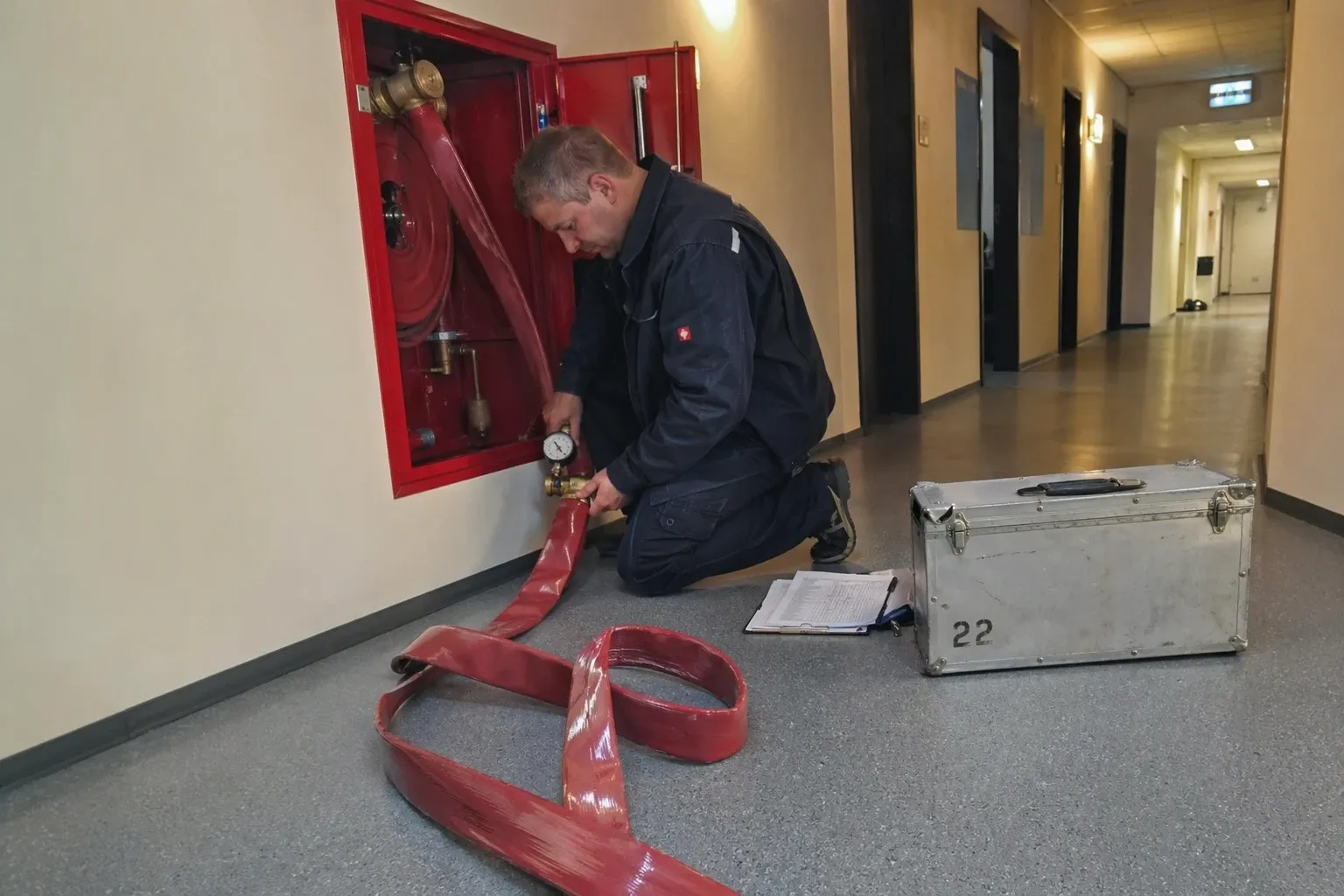
Maintaining Wall Hydrants: applicable proof of usability Explained →
Wall hydrants and their annual test duty in accordance with the applicable proofs of usability — type S vs type F, 5-yearly hose pressure test, cost and documentation duties.
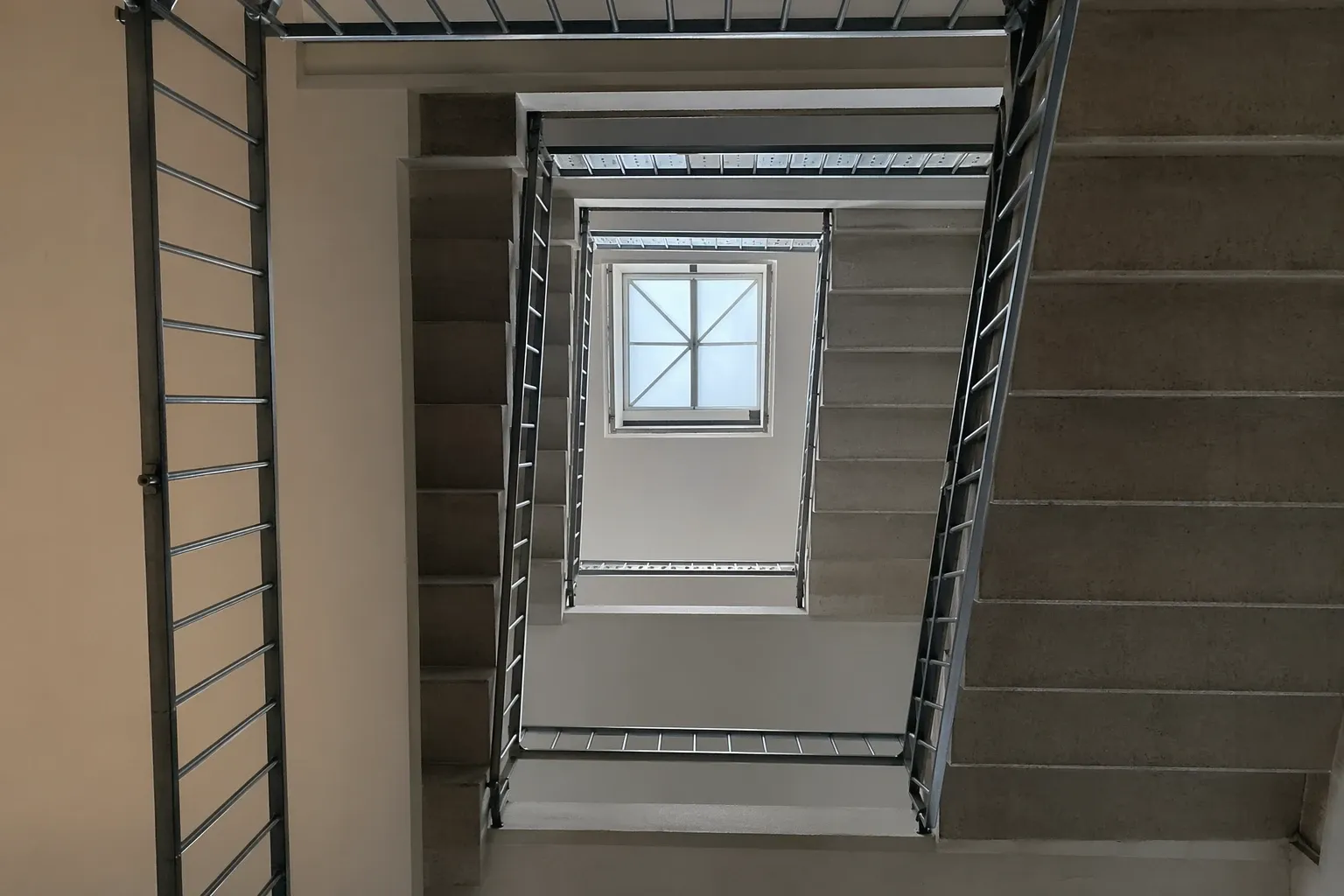
SHEV Service & Testing: Intervals and Standards →
Smoke and heat exhaust ventilators (SHEV) in accordance with the applicable proofs of usability. Mandatory intervals, scope, typical defects, cost.
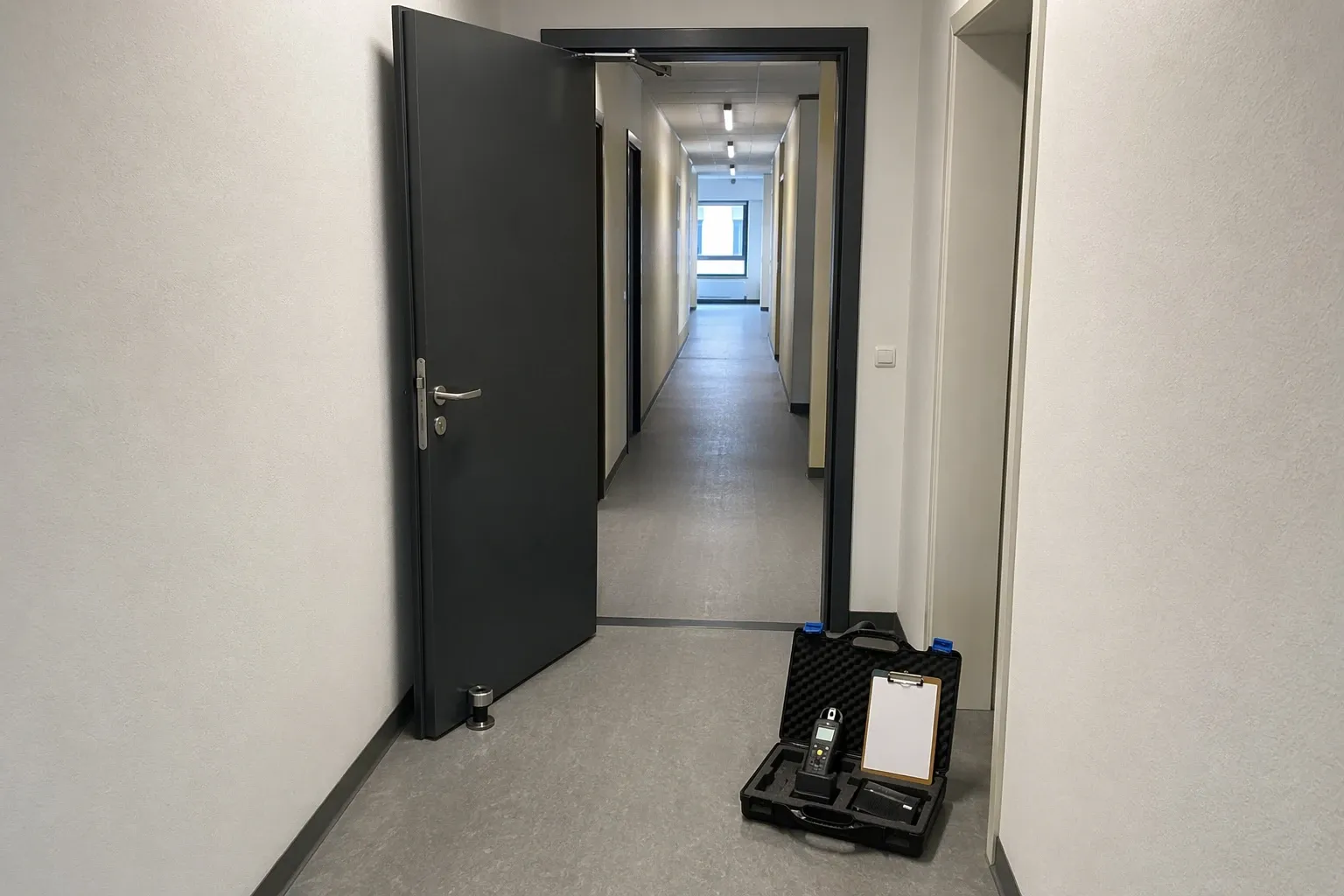
Fire-Door Testing per DIBt, ASR A1.7 and applicable proof of usability →
Who tests fire doors, how often, what exactly? The three rule sets explained: DIBt recommendations for fire-door assemblies, ASR A1.7 for power-operated, applicable proof of usability for automatic.
Fire-Protection Documentation: Operator Liability →
Which documents does the operator need? Test protocols, penetration pass, service records — and how long to keep? Liability on missing documentation.