01
Residential
Apartment buildings, stairwells, transitions to boiler rooms and underground garages — usually with smoke-protection properties.
Certified cable penetration seals for wall and ceiling openings. We plan, install and document in accordance with the applicable proofs of usability and MLAR.
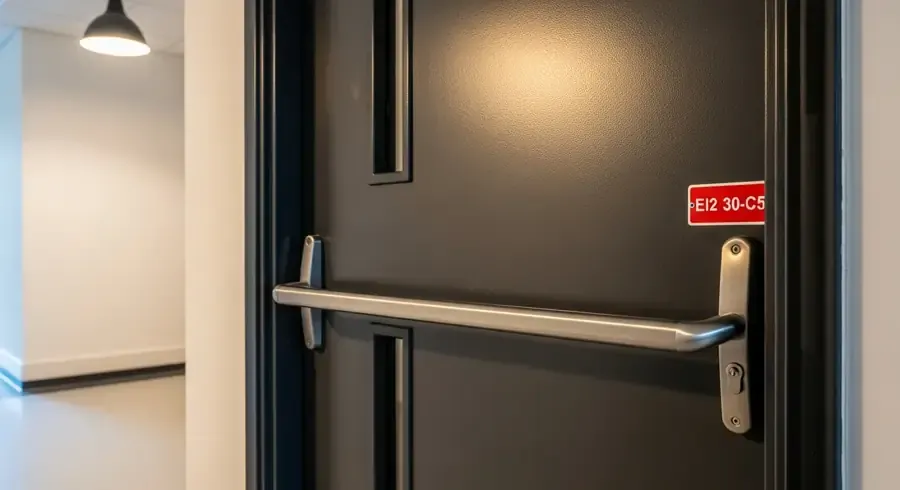
Cable firestops prevent fire and smoke spread along cable trays between compartments. Typical systems: soft seals (stone wool + coating), firestop pillows, firestop mortar, firestop bricks, intumescent compounds. Classification EI30 to EI120 depending on wall/ceiling construction. Every firestop requires a pass with photo, location, system and installer — essential for insurance and inspection.
Which variant fits depends on the installation context, the existing building and the fire-protection concept — we advise per project.
Cost-efficient solution for the most common installation contexts — tested systems from established manufacturers.
For non-standard sizes, installation contexts or higher requirements driven by the fire-protection concept or expert reports.
Recertification of existing components or phased replacement — coordinated around live operations.
All prices excl. VAT. Maintenance contracts are quoted on a per-unit basis.
We cover every typical building type — from residential to industrial complexes with hundreds of components per site.
Apartment buildings, stairwells, transitions to boiler rooms and underground garages — usually with smoke-protection properties.
Separation of production, storage and administration plus protection of mechanically loaded plant.
Schools, hospitals and administrative buildings under NRW special-buildings regulations — often combined with hold-open systems.
European test standard for cable, pipe and combined penetrations.
German classification S90 / S120 for cable penetrations.
Binding rules for routing services through fire-rated elements.
Fundamentals for active and passive fire protection design.
NRW-wide, exclusively with our own installers — no subcontractors.
Aachen to Bielefeld, Lower Rhine to Sauerland — survey usually within five working days.
No subcontractors. Warranty work and maintenance always trace back to the same people.
We schedule appointments proactively. Inspection record for the fire authority comes with every visit.
Walk-through, photo documentation, penetration register — the basis for quotation and pass.
Installation of certified systems with penetration pass and building-book entry.
Refurbishment of open or faulty penetrations in existing buildings — with approved system change.
Walk-through, visual check, documentation updates for insurers and inspectors.
We document the existing state, plan the retrofit and hand over a complete penetration pass.