
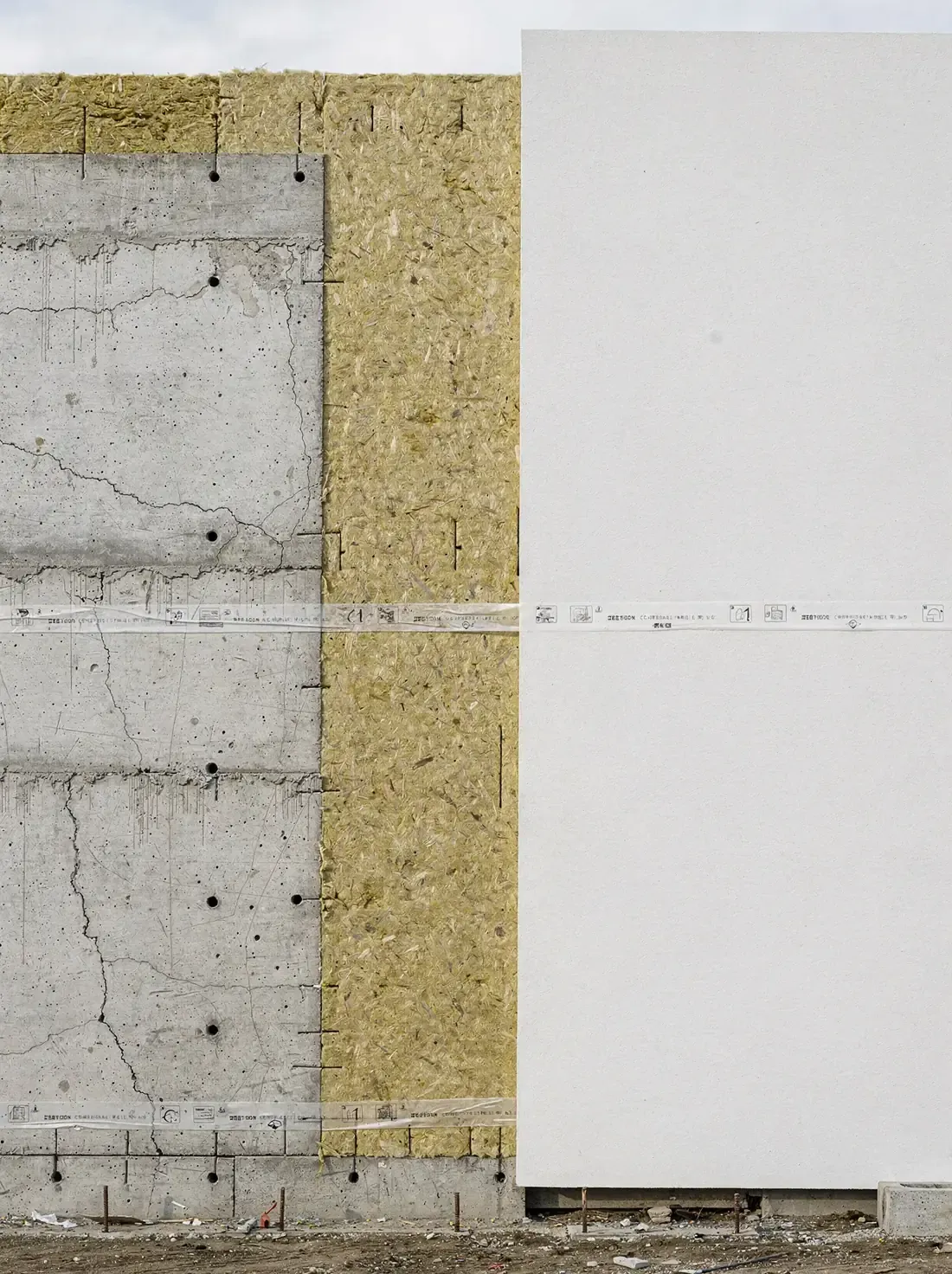
Definition in one sentence
Structural fire protection covers all measures within the building itself that prevent or limit the start, spread and impact of a fire — fire walls, fire doors, penetration seals, fire-rated ceilings.
It is one of the three pillars of preventive fire protection, alongside system-based fire protection (alarm panels, sprinklers) and organisational fire protection (escape and rescue plans, training). Unlike the other two, it works passively: no power, no human reaction, no maintenance activity in the moment of a fire.
The three pillars of preventive fire protection
Preventive fire protection is always an interplay of all three pillars — none replaces another, each has its own role.
| Pillar | Content | Examples |
|---|---|---|
| Structural (passive) | Elements within the building | Fire walls, fire doors, penetration seals |
| System-based | Technical systems | Fire alarm, sprinklers, smoke extraction |
| Organisational | Behavioural layer | Escape and rescue plans, training, fire-safety policy |
What belongs to structural fire protection?
In the narrower sense this includes all fixed building components and built-in elements that hold back fire and smoke or secure the load-bearing capacity of a structure under fire load.
- Fire walls — separate building sections, withstand 90 minutes or more
- Fire doors T30, T60, T90 in steel, aluminium, timber or glass
- Smoke-resisting doors in accordance with the applicable proofs of usability for escape and rescue routes
- Fire gates — sliding, roller, sectional or folding
- Hold-open devices that keep fire doors open in everyday use and close them in case of fire
- Cable, pipe and combination penetration seals in wall and ceiling penetrations
- Fire-protection cladding for steel beams, ventilation ducts and cable trays
- Enclosures for server rooms, machinery and critical cable runs
- Inspection openings with fire-protection approval
- Fire-protection joints and seals, fire-resistant ceilings and walls
The protection goals
Fire-protection components are classified by three protection goals — integrity (E), insulation (I) and load-bearing capacity (R). The concrete class combines goals and a time in minutes: REI 90, EI 60, EW 30 and so on.
- Integrity (E) — prevents passage of flames and hot gases
- Insulation (I) — limits heat transfer to the unexposed side
- Load-bearing capacity (R) — component continues to carry under fire load (steel-beam cladding)
- Time markers 30 / 60 / 90 / 120 minutes set the minimum duration of protection
Legal basis
Requirements for structural fire protection come from building code law. The model building code sets the framework; binding are the respective state building codes — in NRW the BauO NRW.
Special-purpose buildings — assembly venues, hospitals, industrial buildings, retail premises — have additional ordinances with their own, often stricter, requirements. Add to this the workplace ordinance for employers, the industrial-building directive and the relevant DIN and EN standards.
- Model Building Code (MBO) — federal-wide framework
- State building codes, in NRW BauO NRW — binding
- Special-purpose ordinances for assembly, hospitals, industry, retail, hotels
- Workplace ordinance (ArbStättV) for employers
- Industrial-building directive
- applicable proof of usability (national), applicable proof of usability (harmonised European)
Why structural fire protection is the most important pillar
Systems can fail, power can fail, people can panic. Structural fire protection works independently of all that — it is the only pillar guaranteed to be present in an emergency. A fire door 30 years after installation closes the same way it did on day one, provided it is correctly maintained.
- Works independently of power (passive)
- Requires no human reaction in case of fire
- Works 24/7 without maintenance activity (yet still requires maintenance)
- First line of defence in a fire — before systems even react
- Legally the foundation — building approval depends on structural fire protection
Three examples from practice
Three typical building types — and what structural fire protection looks like there. All three appear in roughly every other commission we handle in the Münsterland and Ruhr region.
- Apartment building — T30 entrance doors, F90 fire walls, sealed penetrations for heating and electrical
- Industrial hall — T90 gates in fire walls, enclosures for critical machinery, sealed supply runs
- Server room — F90 enclosure, T90 door with qualified inspection, special seals for fibre and power cables
Structural fire protection in existing buildings
Older buildings rarely meet today's standard — and don't automatically have to. As long as the building remains in its approved state, grandfathering applies. It expires, however, on change of use, on substantial refurbishment or where there is concrete danger to life and limb.
In practice, condition surveys reveal recurring defects: missing or defective door closers, subsequently violated penetration seals, old timber doors in stairwells, missing labelling. A systematic inventory clarifies what is mandatory and what should be retrofitted for commercial reasons.
Who looks after structural fire protection?
Four roles intermesh — planning, execution, operation and control. Each is binding in its own way; each produces its own documents.
- Planning — architect together with a fire-protection expert
- Execution — specialist firms with manufacturer certificates and DIBt evidence
- Operation — owner, manager or operator with maintenance, inspection and documentation
- Control — fire brigade / building authority (audit) and experts on the insurance side